Sometimes life makes the decisions for you. What you do next is another matter entirely.
I never set out to live a life less ordinary. Certainly not this particular version of one. There was no grand plan to abandon conventional living, embrace minimalism or discover the delights of life in a caravan. No romantic notions of escaping the rat race, simplifying my existence or finding myself somewhere in the Scottish countryside.
Quite the opposite, actually. I’d have been perfectly happy keeping my home, my belongings and a kitchen big enough to cook a Sunday roast without performing gymnastics. But life, as I’ve discovered, doesn’t always consult you before making alternative arrangements. And sometimes those arrangements are absolutely bloody awful.
The first night
I’ll never forget our first night in the caravan. It was cold. Soulless. Uncomfortable. There was nothing remotely homely about it, and I remember thinking that this was a completely unacceptable way for us to live. Not that I had a particularly impressive selection of alternatives.
I knew we’d be there for a while. A few months, at least. Had someone suggested we’d still be living this way almost four years later, I don’t think I’d have known whether to laugh, cry or throw something. Probably all three. But that first night, one thing became very clear.
I couldn’t change where we were living, but I could change how we lived there.
And I wasn’t prepared to spend the next few months — however many there turned out to be — sitting in a miserable, uncomfortable box waiting for life to improve.
So the following day, I got to work.
Operation: Make the Bloody Place Habitable
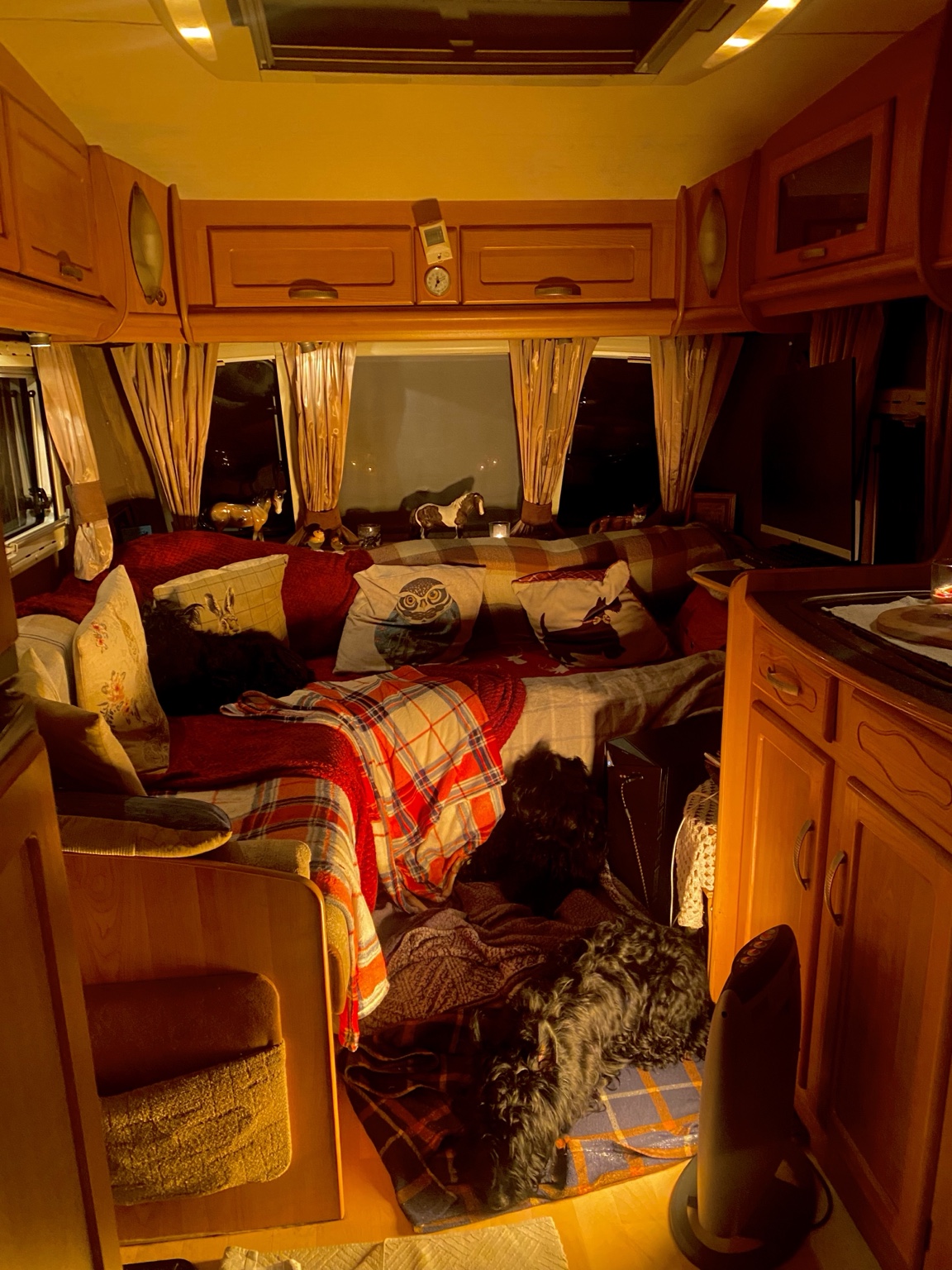
I went and gathered as many of our belongings as I could. Not necessarily the things a sensible person might consider essential for caravan living, either. Plants. Garden sculptures. Lamps. Ornaments. Books. Fairy lights.
Because obviously, when faced with a domestic catastrophe, the first order of business is to sort out the lighting and make sure the garden sculptures have somewhere suitable to live. But it mattered to me. I wanted to look around and see things that belonged to us. Things that had a history, things that meant something, things that reminded us of who we were beyond the circumstances we found ourselves in.
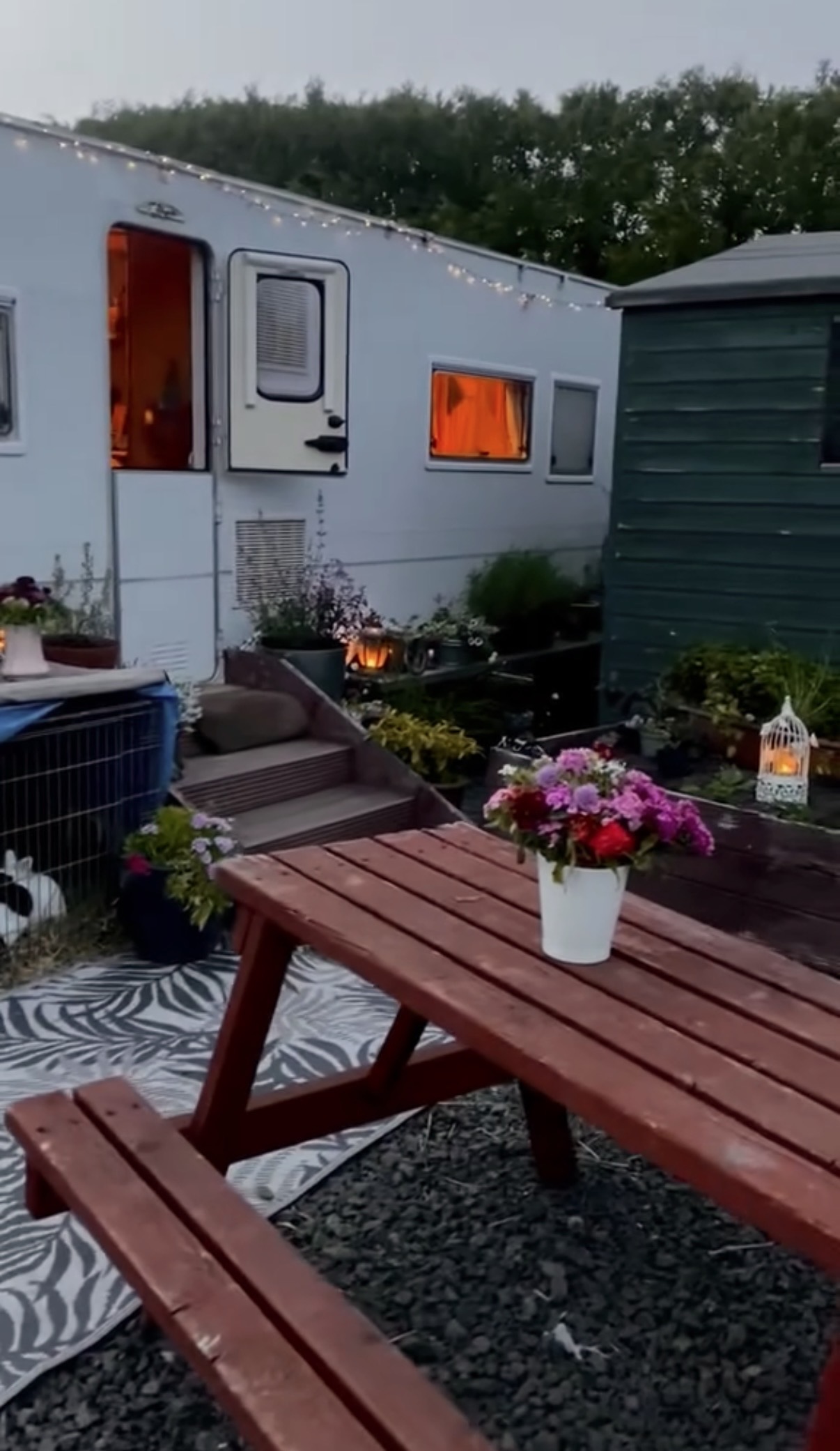
And I wanted the outside to be lovely too. So out came the plants and garden ornaments, and up went the fairy lights. Bit by bit, I began turning the space around the caravan into somewhere that felt cared for.
It wasn’t a proper garden. It wasn’t the home I’d lost. And it certainly wasn’t what I’d imagined for our lives. But it was ours to make the best of. And I was determined to do exactly that.
The extraordinary importance of ordinary things
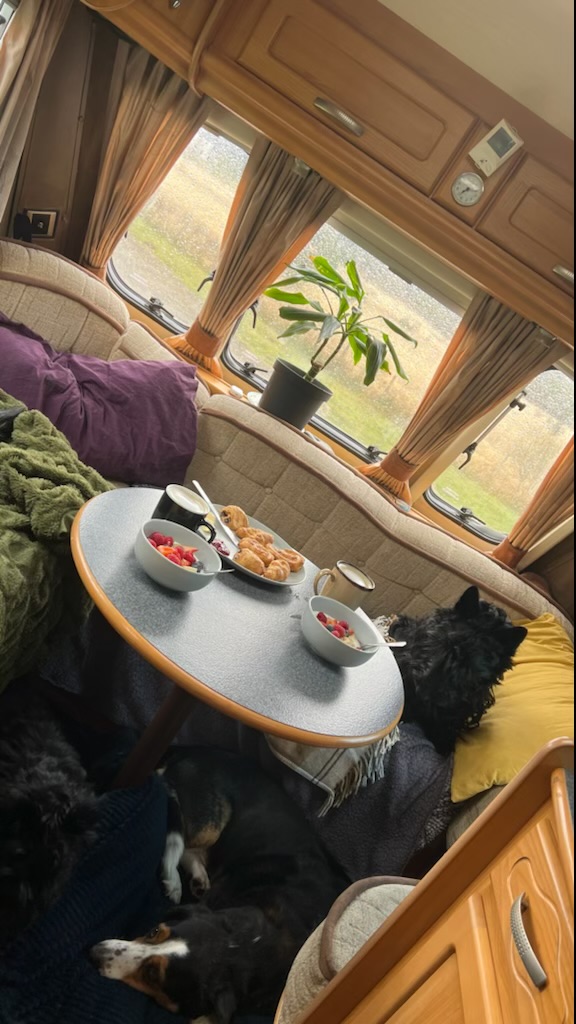
Looking back, most of the things I did were incredibly ordinary. I gathered all of our fluffy blankets, bedding, cushions, pillows, duvets, dogs beds and blankets and made the whole place comfortable and cosy. I added our lamps and softer lighting because there’s something profoundly depressing about sitting beneath a harsh overhead light at the end of an already difficult day.
I made sure everyone had their own space, even though there wasn’t a great deal of space to go around. I kept a small collection of books and put treasured ornaments on display. And I cooked. Proper meals, from scratch. Pies, stews, comforting things that filled the caravan with familiar smells and made an ordinary evening feel a little more like an ordinary evening.
None of this would have been particularly noteworthy in a house. Nobody would think twice about someone putting a lamp on a side table, making a nice dinner or arranging a few favourite ornaments on a shelf. But when so much of your normal life has been turned upside down, those little things take on an entirely different significance.
They become ways of holding on to something familiar. Of reminding yourself that life hasn’t stopped just because it’s become difficult. And, perhaps most importantly, of making somewhere you don’t want to be feel a little less like somewhere you’re trapped.
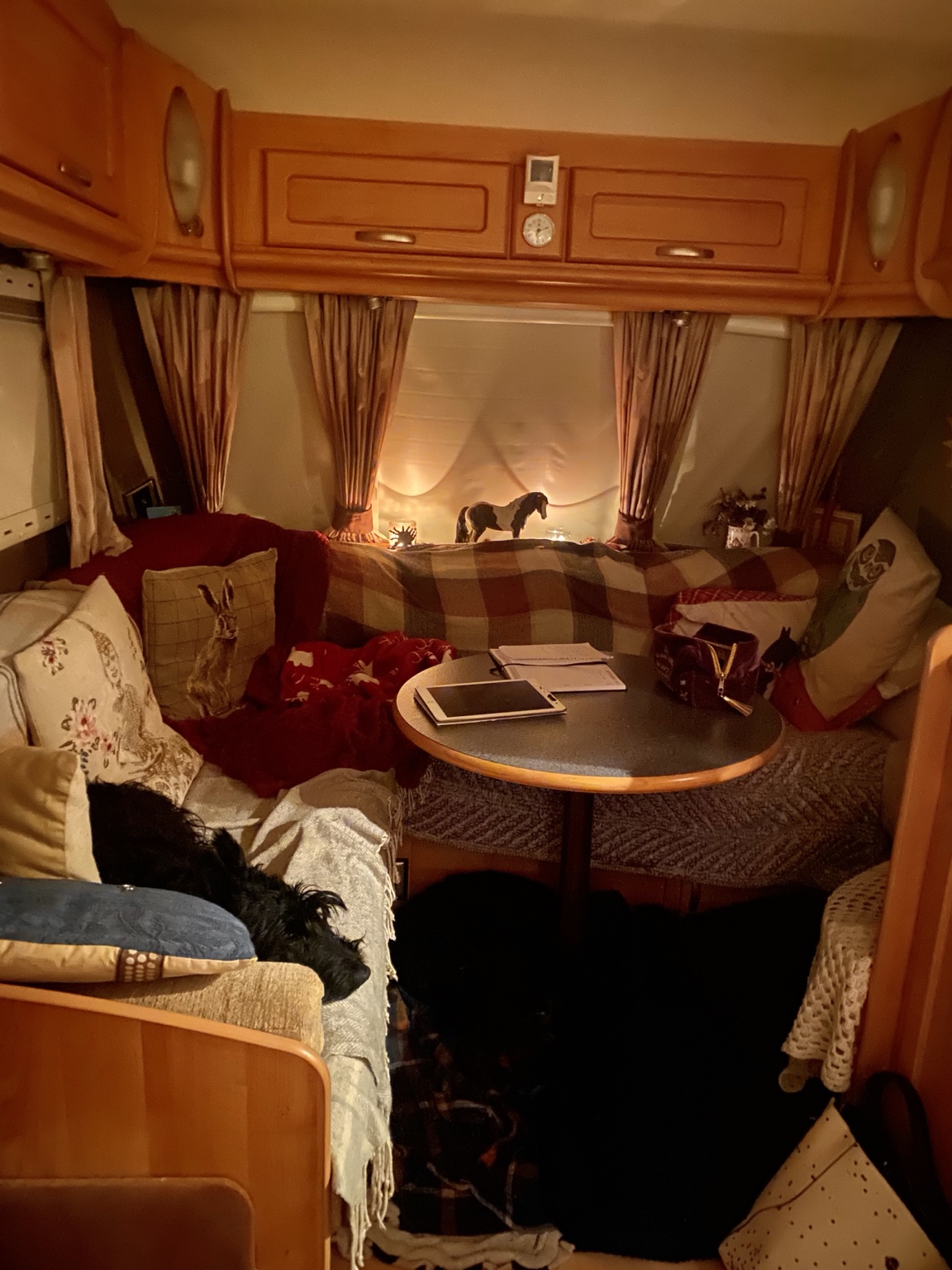
Eight dogs and a fish tank in the shower
And then there were the animals. At the time, we had six Scotties, a Clumber Spaniel and a Basset cross. Eight dogs in a caravan, which was quite enough company for anybody, but we also had fish. Naturally, they came too.
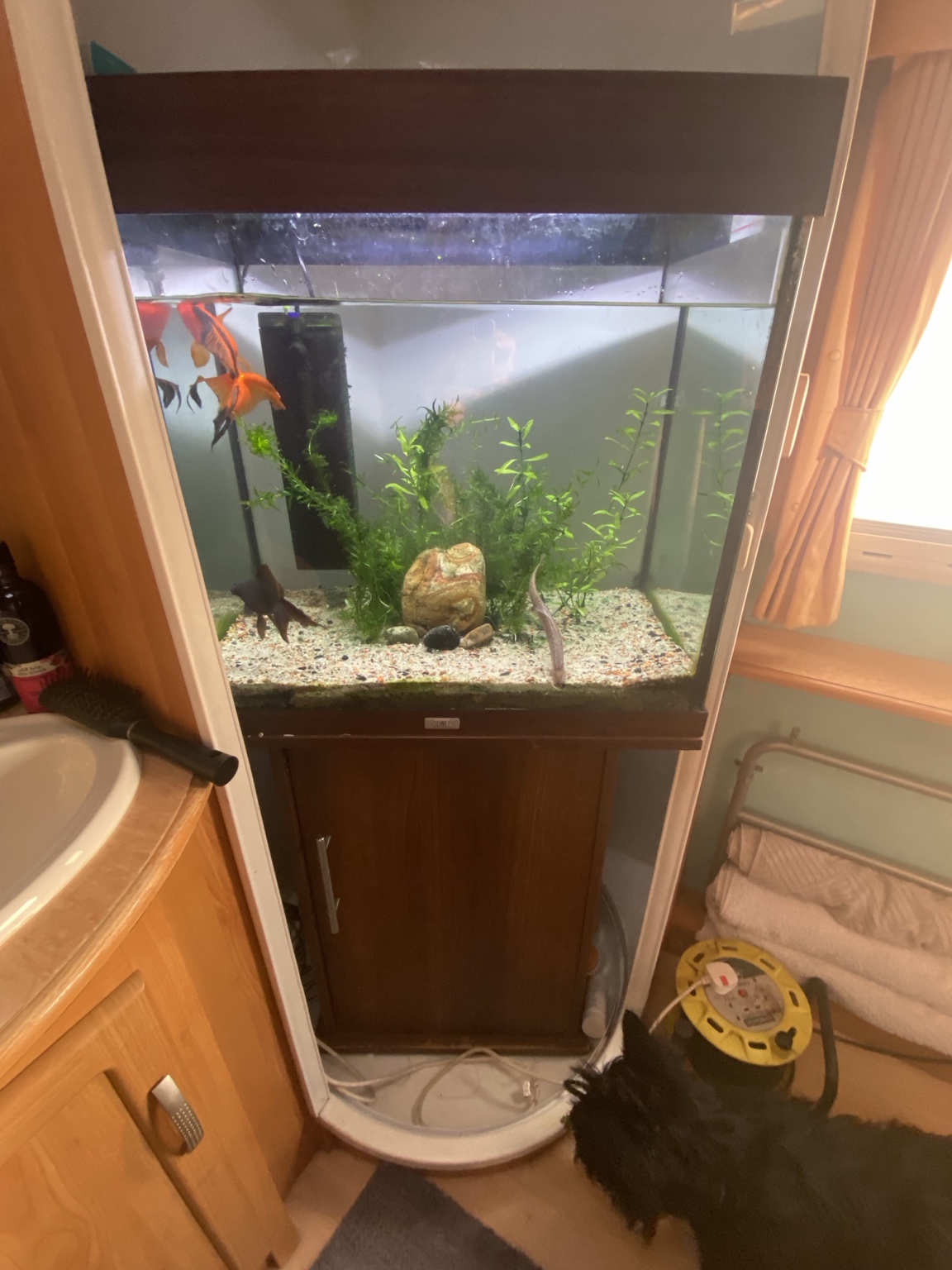
We installed their aquarium in the shower, which wasn’t exactly a great sacrifice considering we had no running water anyway. So there we were, living in a caravan without a functioning shower, while the fish enjoyed their own private aquatic residence.
Looking back, I do wonder how on earth we managed to fit everybody in, make it comfortable, make it cosy and somehow make the whole thing work. But we bloody well did. And after a while, despite everything, it became a life full of adventures.
An office, a television and some questionable carpentry
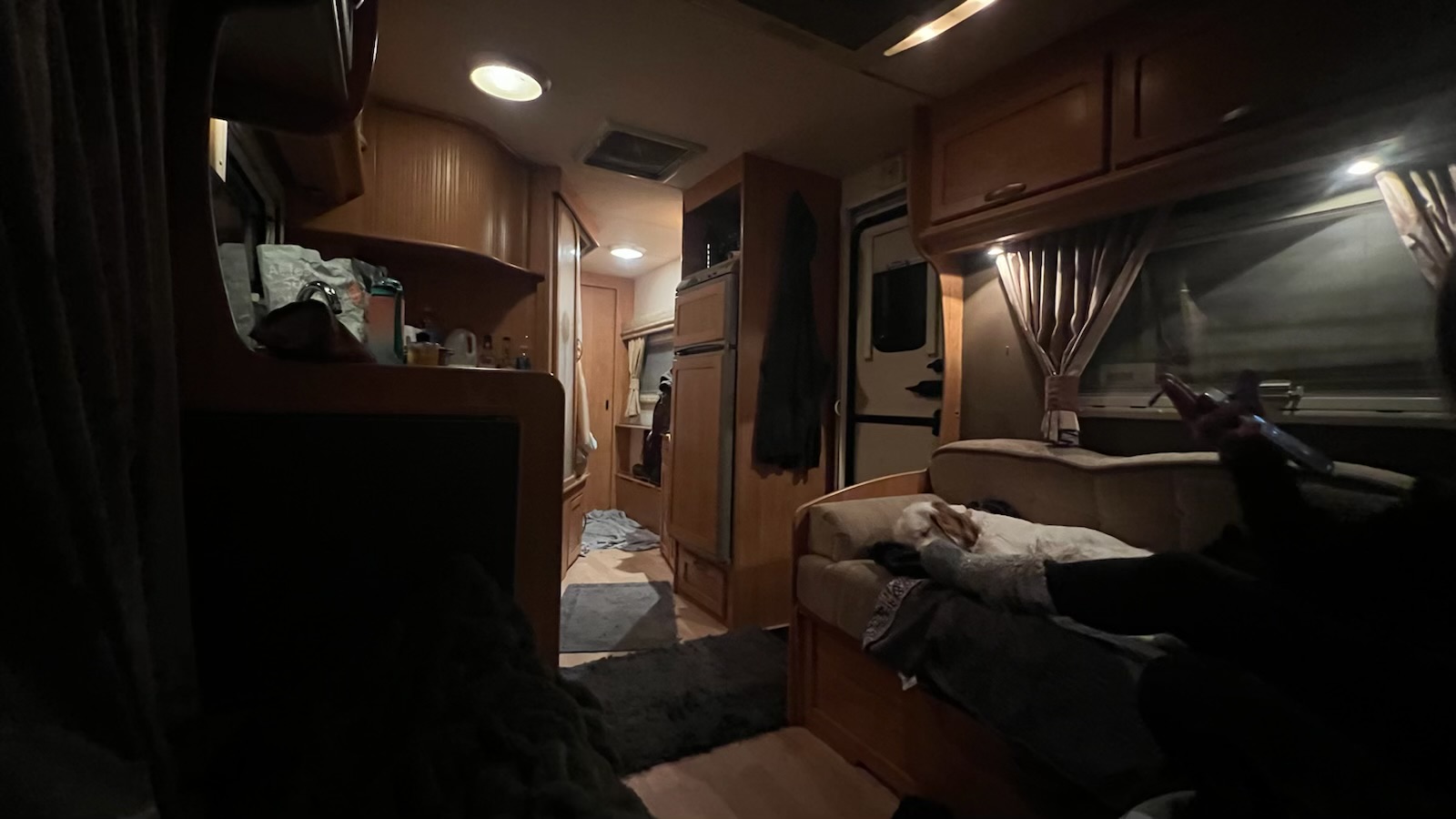
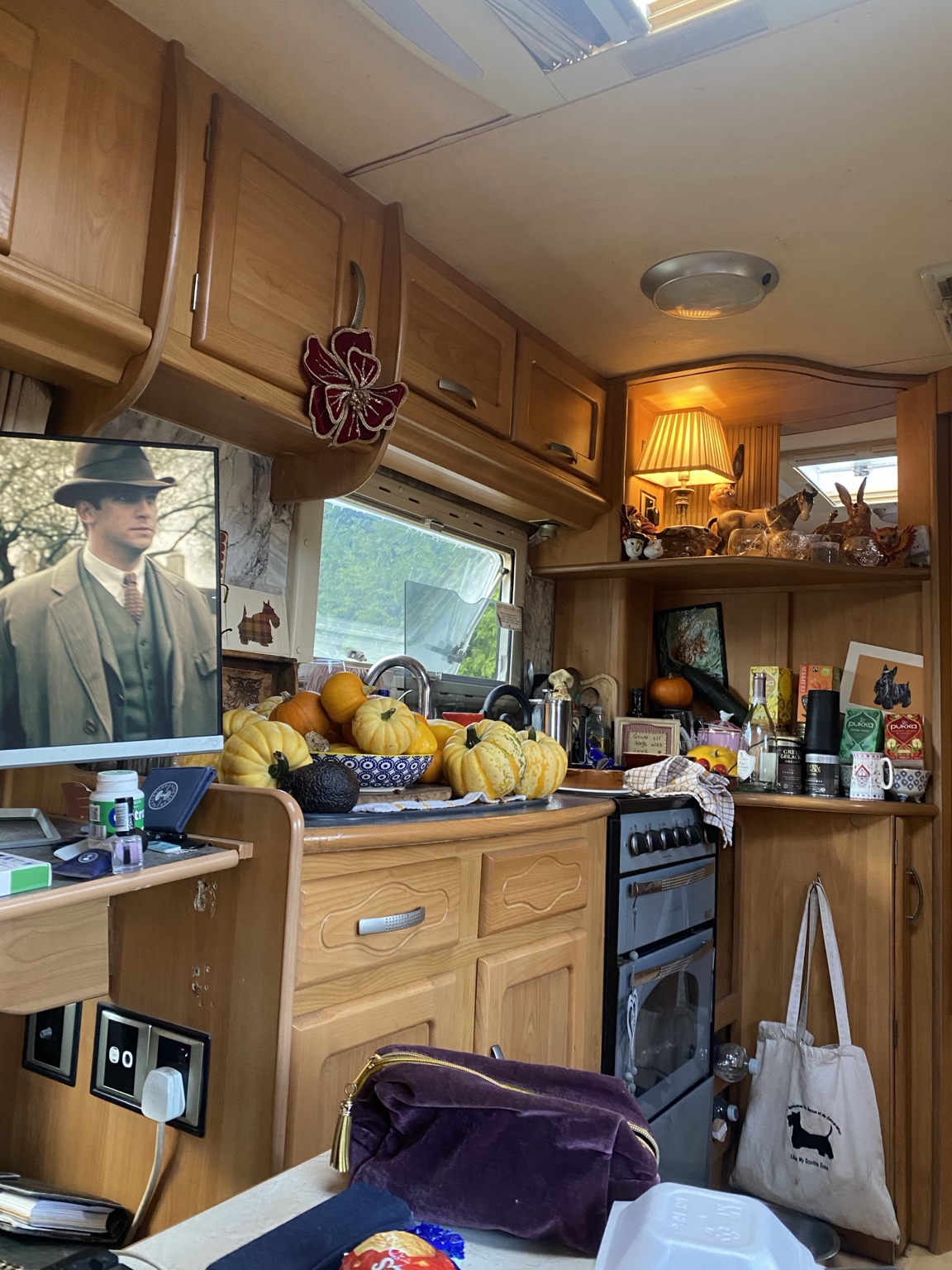
Of course, making a caravan work for everyday life requires a certain amount of creativity. And by creativity, I occasionally mean taking a drill to something and hoping for the best. We didn’t have room for a separate television and computer setup, so I decided the computer would have to do both jobs.
The problem was finding somewhere for everything to go without cables, equipment and assorted bits of technology taking over the entire place. My solution was to make use of the space beneath the sink. I found somewhere for the computer’s hard drive, cut a small hole through the side of the unit for the cables and plugs, and tucked everything away as neatly as possible.
The monitor went on a little shelf. During the day, it was my workspace. In the evening, it became our television. Office by day, sitting room by night.
Not exactly the sort of arrangement you’d find featured in a glossy interiors magazine, although personally I think it showed considerable ingenuity. And it worked. Which, when you’re trying to fit an entire household into a caravan, is quite often the highest compliment you can give anything.
Making the best of a bad job
For a while, we moved between fully serviced caravan sites while we tried to work out what came next. We needed somewhere more permanent, ideally somewhere we could live and work, but finding the right place wasn’t straightforward. In the meantime, we made the most of wherever we found ourselves. It wasn’t the life we’d planned, and I certainly wouldn’t have chosen it, but there were places to explore, new experiences to be had and, eventually, some rather wonderful adventures amongst all the uncertainty.
I want to be clear about something. I didn’t love living in a caravan. I didn’t choose it, I didn’t want it, and I wouldn’t recommend being forced into a situation like ours as some wonderful opportunity for personal growth.
There were times when it was horrendous. And no amount of fairy lights, fluffy blankets or homemade pie could change the reasons we were there. But they could change how it felt to be there.
They made evenings more comfortable. They gave us little routines to enjoy. They made our surroundings warmer, more familiar and more peaceful. They helped turn a place we had to live into somewhere we could actually live. There’s a difference. And I think it’s an important one.
Because making the best of a bad situation doesn’t mean pretending it’s a good situation. It simply means deciding that, while you might not have much control over the bigger picture, you’re not going to surrender every little pleasure along with it.
Almost four years later
It’s strange looking back now. When I think about those first few days, I remember how awful it felt. I remember the uncertainty and the disbelief that this was what our lives had come to.
But I remember other things too. The warm glow of the lamps in the evenings. The fairy lights outside. The familiar ornaments and the little collection of books. The smell of something lovely cooking. The satisfaction of finding a clever way to make a tiny space work. And all the ordinary moments that somehow became rather precious because of the extraordinary circumstances surrounding them.
I can even laugh about some of it now. Not because it was funny at the time. Believe me, it wasn’t. But because, looking back, there’s something faintly ridiculous about the lengths we went to in order to make things work. And there’s something rather wonderful about knowing that we did.
I’m so bloody proud of us. Not because we endured it without complaint or managed to smile through every difficult day. We didn’t. But because we kept going.
We made things. We cooked meals. We created comfort. We found things to enjoy. We made memories. We lived. And although I wouldn’t choose those years again, I refuse to write them off as years in which life was simply on hold.
There were good days amongst the awful ones. There were moments of beauty, comfort, laughter and happiness. And those moments mattered.
Life doesn’t have to be perfect to be worth living
I’m still working towards the life I want. A proper home. Space. Comfort. Freedom. A garden. Room for all of us and all the things that make life lovely. I haven’t abandoned any of those dreams. Quite the opposite. If anything, the last few years have made me appreciate them even more.
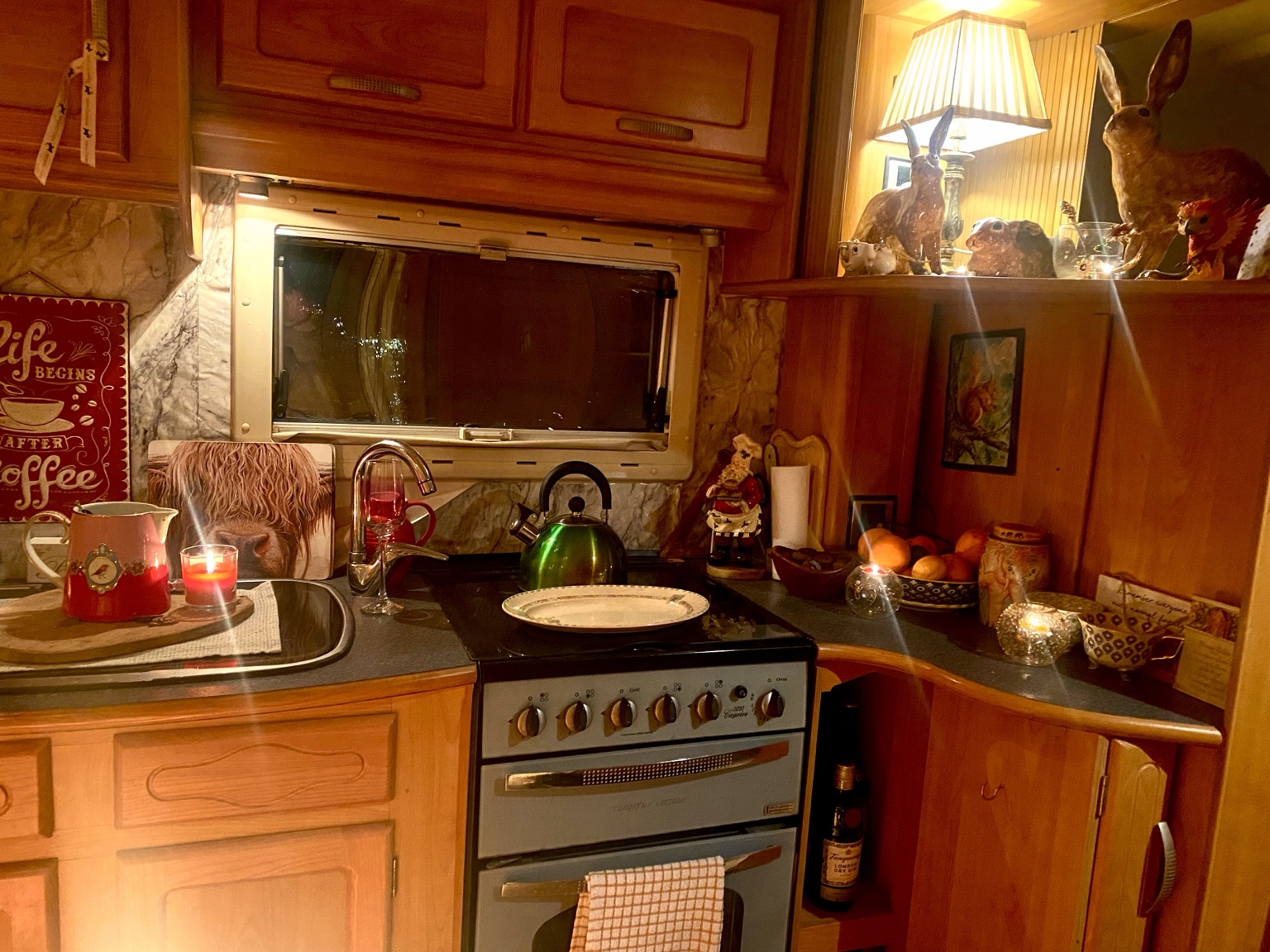
But I’ve also learned something I don’t want to forget when life finally looks the way I want it to. The everyday things matter. A cosy bed. A good meal. A lamp glowing in the corner. Flowers on the table. A book you love. Somewhere comfortable to sit with the people and animals who mean the world to you.
They’re not extravagant luxuries. They’re the little ingredients that make an ordinary day feel wonderful. And sometimes, when life is anything but ordinary, they’re the very things that keep you going.
I never intended to live this particular life less ordinary. But I did make a thousand small decisions about how we were going to live it. And looking back, I’m rather proud of that.
You don’t have to wait until life is wonderful to begin living wonderfully.
Sometimes you just have to start with a lamp, a fluffy blanket and a bloody good pie.